
The Benefits of Sound Therapy for Mind and Body: A Guide to Relaxation and Wellbeing

Updated: Jul 28

Modern life often encourages us to keep going. Between work, family, technology and everyday responsibilities, many of us spend our days moving from one task to the next with little opportunity to pause. While our bodies are designed to respond to periods of challenge and stress, they are equally designed to rest, recover and recharge.
As a holistic life coach, Tai Chi meditation teacher and sound bath facilitator, I've seen how simply creating space to pause can help people leave feeling calmer, more present and better equipped to navigate life's challenges. Time and again, participants tell me they didn't realise just how much they needed to slow down until they gave themselves permission to do so.
This is where practices such as sound therapy can play a valuable role. Creating dedicated time for deep relaxation is one way we can support our overall wellbeing. Rather than trying to "switch off" completely, sound therapy offers an opportunity to slow down, reconnect with the present moment and create space for both body and mind to rest.
In this guide, we'll explore what sound therapy is, how it may support relaxation and wellbeing, what current research says, and why making space to rest can help us better navigate the demands of modern life. Whether you're new to sound baths or simply curious about how sound therapy complements mindfulness and meditation, this article will provide a practical introduction to this increasingly popular wellness practice.
The Benefits of Sound Therapy for Mind and Body: A Guide to Relaxation and Wellbeing
Overview
What is Sound Therapy?

Sound therapy is a broad term that describes the intentional use of sound, music and vibration to support relaxation, wellbeing and therapeutic experiences.
The National Center for Complementary and Integrative Health (NCCIH), part of the U.S. National Institutes of Health, discusses music-based approaches as complementary practices that may help people relax, reduce stress and improve their overall sense of wellbeing.
Sound therapy can take many forms, including:
Singing bowls
Gongs
Chimes
Rainsticks or ocean drums
Handpan
Vocal toning
Nature sounds
Guided meditation accompanied by sound
One increasingly popular form of sound therapy is the sound bath.
Despite its name, there is no water involved. Instead, participants are "bathed" in layers of soothing sounds created by various instruments while resting comfortably, usually lying down or sitting in a relaxed position.
Each sound bath is unique. Different instruments create different tones, textures and vibrations, allowing every session to become its own experience. Some people describe feeling deeply relaxed. Others notice a quieting of the mind or a greater sense of presence.
While every person's experience is unique, the intention is to create a calm environment where participants can disconnect from everyday distractions, become more present and enjoy uninterrupted time for relaxation.
As a holistic wellbeing practice, sound therapy is best viewed as one tool among many that can support relaxation, mindfulness and self-care.
For Australian readers, it is worth noting that sound therapy and sound bath research is still relatively limited locally. If you want Australian sources to reference, the most useful evidence tends to come from broader areas such as relaxation, mindfulness, music therapy and wellbeing research.
Why Relaxation Matters More Than Ever

Many of us have become so accustomed to being busy that we rarely stop to consider how much time we actually spend resting.
Between work, family responsibilities, technology and the constant stream of notifications, it's easy to feel like we need to be available, productive or "on" all the time. While there will always be seasons of life that are busier than others, our bodies were never designed to operate at full speed every moment of every day.
Just as we are encouraged to "fill our own cup" so we can better support those around us, our wellbeing depends on our ability to pause, replenish and restore our energy. When we are running on empty, everything in life begins to feel harder to manage.
You may have heard the analogy used on aeroplanes: when the oxygen masks drop, you're instructed to put your own mask on first before helping others. This isn't selfish—it ensures you are in a position to care for what matters most. In many ways, relaxation works in the same way. When we are rested and grounded, we are better able to show up for work, family and life’s responsibilities with clarity and patience.
Many people notice that after taking time to genuinely relax they feel:
More mentally clear
Better able to concentrate
More patient with others
Better equipped to manage challenges
More emotionally balanced
More present in their daily lives
Think of your body like a rechargeable battery. If you continually use your phone without ever plugging it in, eventually the battery runs flat. In much the same way, we can't continually give our energy to work, family and responsibilities without making time to replenish ourselves.
This is one reason practices such as mindfulness, meditation, Tai Chi, gentle movement and sound therapy like sound bath meditations have become increasingly popular. They offer intentional opportunities to pause, reconnect with ourselves and step out of constant doing, even if just for a short time.
In many ways, rest is not the opposite of productivity—it is one of the foundations that makes sustainable productivity possible.
🌿 Take a Moment to Pause
Reading about relaxation is one thing—experiencing it is another.
If you'd like to take a few minutes to reconnect with yourself, I'd love to share a free 10-minute Grounding Meditation that you can listen to anytime you need a moment of calm.
Whether you're feeling overwhelmed, mentally busy or simply need a gentle reset, this guided meditation offers a simple way to slow down and return to the present moment.
Enter your name and email below to receive your free Grounding Meditation.
So what actually happens inside the body when we become stressed, and why does this make relaxation so important?
Understanding the Body's Stress Response

Have you ever noticed your shoulders tense up during a stressful day, your breathing become shallow, or your heart begin to race before an important meeting? These are all examples of your nervous system doing exactly what it was designed to do—protect you.
When the brain perceives a threat, it activates the sympathetic nervous system, often known as the fight-or-flight response.
Stress hormones such as adrenaline and cortisol are released. Heart rate increases, breathing becomes quicker, muscles prepare for action and energy is directed towards systems needed for immediate survival. At the same time, functions such as digestion and other restorative processes become less of a priority.
This response was essential for human survival. Our ancestors may have been faced with very real, immediate threats—such as a hungry sabre-toothed tiger—and their nervous system needed to react quickly in order to survive.
The challenge is that while the nature of threats has changed, our nervous system has not.
Today’s stressors are more likely to be things like work deadlines, financial pressure, social expectations, performance reviews or even the fear of being judged in a meeting or social situation.
Although these situations are not life-threatening, our bodies can still respond as if they are.
The same stress chemistry is activated whether we are facing physical danger or simply worrying about how we are perceived by others.
When this state is activated repeatedly or for long periods of time, it may contribute to fatigue, muscle tension, poor sleep and difficulty concentrating. Over time, it can leave us feeling mentally and emotionally depleted.
Fortunately, the body also has a natural balancing system known as the parasympathetic nervous system, sometimes referred to as the rest-and-digest response.
When this system becomes more active, heart rate slows, breathing deepens, muscles soften and the body is able to shift into a state of recovery and restoration.
This isn't about eliminating stress altogether. Stress is a normal and necessary part of life. Rather, it is about supporting the body to move more fluidly between periods of activation and periods of rest.
The more we practise returning to a calmer state, the more capacity we may build to respond to life's challenges with steadiness, rather than feeling constantly overwhelmed by them.
How Sound Therapy Supports Relaxation and Wellbeing

One of the greatest gifts of sound therapy is that it invites us to pause.
During a sound bath meditation, there is nothing to achieve, nowhere to rush to and no expectations to perform. Participants are simply encouraged to become comfortable, close their eyes if they wish, and allow themselves to be present with the sounds around them.
One of my favourite moments as a facilitator is watching people gradually settle into the experience. Shoulders soften, breathing slows and the busyness of the day begins to fade. It's often only then that people realise how much tension they had been carrying.
For many people, this may be one of the few times in the week when they intentionally disconnect from external distractions and give themselves permission to simply rest.
As the sounds of singing bowls, handpan, chimes, gongs and other instruments fill the space, many people naturally begin to slow their breathing, soften muscular tension and settle into a quieter state of awareness. While every person's experience is different, creating an environment that feels calm and safe may encourage the nervous system to move away from a heightened stress response and towards a more restorative state.
When we feel safe, the body no longer needs to remain on constant alert. Breathing often becomes slower and deeper, muscles begin to release unnecessary tension and many people notice a sense of stillness that can be difficult to find in everyday life.
This relaxed state allows the body an opportunity to recharge.
Rather than asking the body to do more, sound therapy offers permission to do less. In a world that constantly encourages productivity, simply allowing ourselves to pause can be surprisingly powerful.
When we regularly create space for rest, we often return to our daily activities with greater mental clarity, patience and resilience. Rather than reacting automatically to every challenge, we may find ourselves responding more thoughtfully and calmly.
This is one reason sound therapy is often incorporated alongside practices such as mindfulness, meditation, Tai Chi and gentle movement. Although each approach is different, they all encourage us to slow down, become more aware of the present moment and support healthy nervous system regulation.
It's important to remember that everyone's experience of sound therapy is unique. Some people feel deeply relaxed during a session, while others simply enjoy having uninterrupted time to pause. There is no "right" way to experience a sound-based meditation, and the effects can vary from person to person.
Rather than viewing sound therapy or sound bath meditations as something that fixes us, I prefer to think of it as creating the conditions that allow the body and mind to do what they naturally know how to do—rest, recover and regain balance.
Over time, making relaxation a regular part of life may help us build what I like to call our "resilience muscle." Just as we strengthen our physical muscles through consistent practice, regularly giving ourselves permission to slow down can strengthen our ability to navigate stress with greater calm, adaptability and presence.
Sound therapy isn't about escaping life's challenges. It's about taking the time to recharge so that when challenges arise, we have more energy, clarity and resilience to meet them.
What Does the Research TELL US ?

The scientific research on sound baths is still evolving. While there is growing interest in how sound-based practices may influence relaxation and wellbeing, there is currently more research available on related areas such as mindfulness, meditation, relaxation techniques and music-based interventions than there is on sound baths specifically.
Current evidence suggests that:
Music-based interventions may help reduce stress and promote relaxation for some people.
Relaxation techniques can help calm the body's stress response and encourage a shift towards a more restorative state.
Mindfulness and meditation are supported by a growing body of research for improving emotional wellbeing, resilience and stress management.
Listening to calming sounds or music may contribute to feelings of relaxation and improved mood for some individuals.
It's important to understand the distinction between these areas. Clinical music therapy is a recognised healthcare profession delivered by university-qualified, registered music therapists, whereas a sound bath is generally offered as a complementary wellbeing practice designed to create a calming environment for rest, mindfulness and relaxation.
Although research specifically investigating sound baths is still limited, many people report feeling deeply relaxed, mentally refreshed and more present after a session. Individual experiences vary, and sound baths should be viewed as a supportive wellbeing practice rather than a medical treatment.
For readers who would like to explore the research further, reputable sources include Australian government health information on relaxation and wellbeing, research into mindfulness and meditation, and evidence relating to music-based interventions.
Why I Share Sound Baths
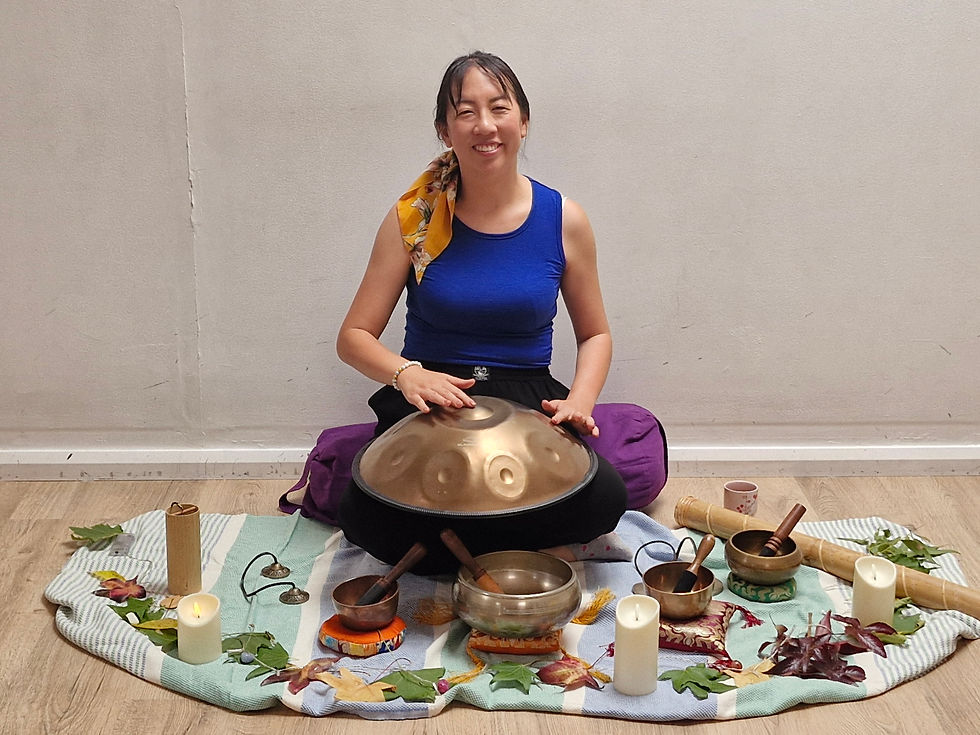
I come to sound baths through a background in mindfulness, meditation and Tai Chi rather than clinical music therapy.
My approach is centred on creating a peaceful, welcoming space where you can slow down, become present and give yourself permission to rest. During a session I play instruments intuitively to support a guided relaxation experience, drawing on my training in meditation and my experience helping people cultivate calm and mindfulness.
For me, the instruments are not the focus—they are simply one of the ways I help create an environment that encourages stillness, reflection and deep relaxation.
Rather than aiming to "treat" symptoms or conditions, my intention is to support your wellbeing by offering an opportunity to pause, breathe and reconnect with yourself. I see sound baths as a complementary wellbeing practice that can support relaxation and mindfulness alongside the many other ways we care for our health and wellbeing.
What To Expect During A Sound Bath

If you're attending a sound bath meditation in Sydney or joining a class elsewhere, the format may vary slightly, but most sessions follow a similar rhythm.
Typically, you will be invited to lie down on a mat or sit in a comfortable position. Many people bring a blanket, cushion, eye pillow or yoga mat so they can settle in more easily.
The facilitator may begin with a short grounding practice, gentle breathing or a brief introduction before the sound journey begins.
During the session, instruments such as singing bowls, gongs, chimes or other resonant tools are played in layers. The sounds may rise and fall, overlap or move through the space in a way that encourages deep rest. There is usually no need to do anything, achieve anything or respond in any particular way.
Some people drift into a meditative state. Others remain fully awake but feel deeply relaxed. You may notice physical sensations such as warmth, tingling or heaviness, or you may simply experience a quieter mind. All of these responses are normal.
Many people seek sound bath benefits such as deep rest, mental quiet and a sense of emotional reset. After the session, it can be helpful to move slowly, drink water and give yourself a few moments before returning to your usual routine.
Some participants tell me they lose track of time, while others simply enjoy having an hour where nobody expects anything from them. Every experience is different, and that's perfectly okay.
There is no right or wrong experience. The most important thing is to arrive with an open mind and allow the session to unfold naturally.
Experience a Sound Bath in Sydney
If you're based in Sydney and would like to experience sound bath meditation for yourself, I'd love to welcome you to one of my monthly Mindful Movement & Sound Bath sessions.
Each session combines gentle mindful movement incorporating Tai Chi, calming breathwork and an immersive sound bath meditation, creating a welcoming space to slow down, unwind and reconnect with yourself.
No experience is necessary, and everyone is welcome.

Simple Ways to Bring More Relaxation Into Everyday Life

While a sound bath can be a powerful way to pause and reset, relaxation also becomes more sustainable when it is woven into everyday life.
Here are a few simple ways to create more calm throughout your day:
Take three slow breaths before moving from one task to the next.
Build a short mindfulness or meditation practice into your morning or evening routine.
Reduce unnecessary notifications so your nervous system has fewer interruptions.
Spend five minutes sitting quietly without reaching for your phone.
Go for a mindful walk and notice the sounds, colours and sensations around you.
Stretch gently or practise Tai Chi to release physical tension.
Schedule rest in the same way you would schedule work or appointments.
Listen to calming music or nature sounds while you unwind.
Create a bedtime routine that supports better sleep and recovery.
Attend a sound bath or relaxation class when you feel the need to reset.
Even a few minutes of intentional rest can make a difference. The goal is not to eliminate stress entirely, but to create regular moments where your body and mind can recover.
Final Thoughts

In a world that often celebrates being busy, choosing to slow down can feel unfamiliar. Yet it's in those quieter moments that we often reconnect with ourselves.
Whether that pause comes through a few mindful breaths, a Tai Chi practice, a walk in nature or a sound bath meditation, each moment of intentional rest is an investment in your wellbeing.
My hope is that this article has encouraged you to see relaxation not as something to feel guilty about, but as an important part of living well.
When we make time to restore our energy, we're often better able to meet life's challenges with greater calm, clarity and resilience.
I also offer:
private sound bath sessions
community wellbeing events
corporate and workplace sound bath experiences
tailored meditation and relaxation workshops
If you’d like to create a customised experience for your group, workplace or event:
📧 Email: info@theresaperrywellbeing.com📞 Call: 0439 382 933
I’m always happy to have a chat about tailoring an experience to suit your needs.
Other related articles

Author's Approach on Sound Bath Meditation
Theresa Perry's approach combines mindfulness, meditation and intuitive sound to create a space where you can slow down, relax and reconnect with yourself. While many people find sound baths deeply restorative, they are offered as a complementary wellbeing practice and are not a substitute for medical or mental health treatment.


Comments