
Comparing Sound Baths to Other Relaxation Practices


With so many ways to relax in modern life—yoga, walking, meditation apps, social catch-ups, exercise classes—it can be hard to know what actually works best for you.
And more importantly: What kind of relaxation do you actually need in the moment?
Some practices energise you. Some help you process thoughts. Some help you connect socially. And others help you completely switch off.
Sound baths sit in a unique category of their own—offering a deeply immersive experience of rest through vibration, sound and guided presence.
Let’s explore how they compare to other common relaxation practices, and why they feel so different for many people.
Comparing Sound Baths to Other Relaxation Practices
OVERVIEW:
Ease Of Entry

One of the biggest differences between sound baths and other relaxation practices is how easy they are to begin.
Sound Baths
Sound baths are fully guided and passive.
You simply:
Lie or sit down
Close your eyes
Listen
Allow yourself to rest
There is nothing to “do correctly.”
For many people, this is a relief—especially if they have ever tried meditation and felt like they were “doing it wrong” because their mind was busy.
Traditional Meditation
Traditional sitting meditation often requires:
focus on breath
awareness of thoughts
returning attention repeatedly
While incredibly powerful, it can feel challenging for beginners who are already mentally overloaded.
A Relatable Example
One participant once shared:
“I always thought I was bad at meditation because I couldn’t stop my thoughts. In a sound bath, I didn’t feel like I had to try—it just happened naturally.”
This is a very common experience.
Sound becomes an anchor that gently holds your attention without effort.
And just like a piano or guitar, the instrument itself is only one part of the experience.
Depth Of Relaxation

Relaxation is not just about feeling calm—it’s about how deeply the nervous system can shift into rest mode.
Research on meditation suggests it can:
reduce perceived stress
improve attention and mental clarity
support emotional regulation
improve restfulness and sleep quality
(Source: PubMed Central)
While popular claims like “20 minutes of meditation equals hours of sleep” are not scientifically precise, what is supported is that meditation activates the parasympathetic nervous system—the body’s natural rest-and-repair state.
What This Feels Like in Real Life
People often describe sound bath experiences as:
“I didn’t realise how tired I was until I stopped.”
“My body felt like it had finally switched off.”
“It felt like a reset button for my mind.”
Unlike active relaxation practices, sound baths often create a downshift in both mental and physical tension at the same time.
Emotional Release And Processing

One of the most unique aspects of sound bath meditation is how it can support emotional release without effort.
Sound works differently from language-based practices.
Instead of engaging the thinking mind, it can:
soften mental resistance
bypass overthinking
create space for emotional processing
A Common Example
A participant might arrive feeling “fine” but notice:
unexpected emotions arising
memories surfacing
a sense of lightness or release afterward
Sometimes this happens during the session. Sometimes it unfolds quietly in the 24 hours afterward.
There is no forced processing—just space.
And for many people, that feels incredibly safe and natural.
Comparison To Other Common Practices
Let’s look at how sound baths compare to other popular relaxation methods in everyday life.
Walking

Walking is wonderful for:
movement
fresh air
mental clarity
light stress relief
However, walking is still externally focused—you are observing, moving, and engaging with the environment.
Sound baths, in contrast, are inward-focused, encouraging stillness rather than activity.
Social Catch-Ups

Spending time with friends can:
uplift mood
provide emotional support
create connection
But social interaction still involves:
conversation
processing information
emotional engagement
Even enjoyable social time can be stimulating rather than restorative.
Yoga

Yoga blends:
movement
breath awareness
body connection
It is deeply beneficial, but still requires:
physical effort
coordination
attention
Sound baths remove physical demand completely, allowing the body to fully rest.
Sound Baths

Sound baths offer:
deep rest without effort
guided relaxation
sensory immersion
nervous system regulation
They are often described by many students as:
“the first time I actually felt like I fully stopped.”
Why Sound Baths Feel Different
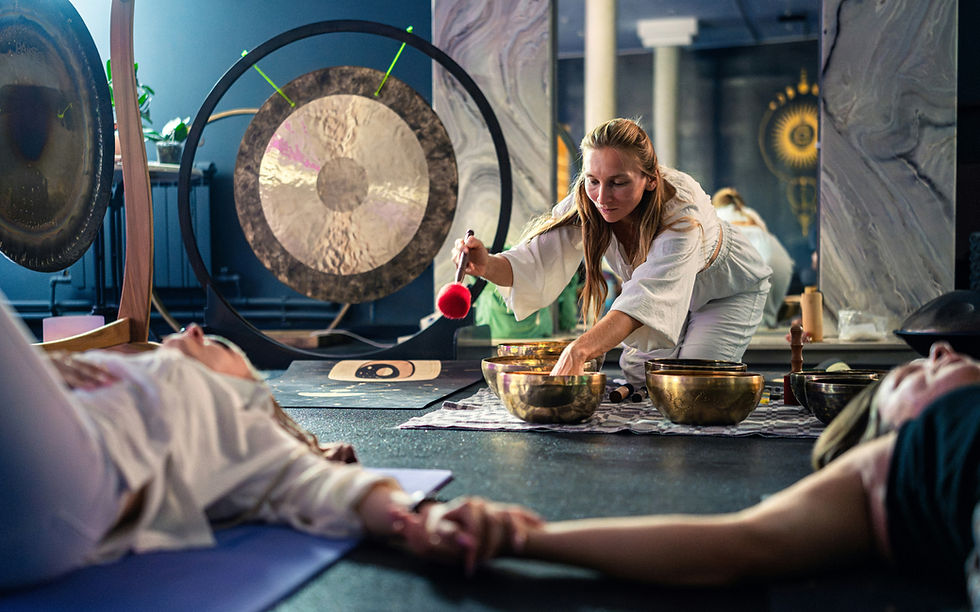
The key difference is this:
Sound baths do not require effort to relax.
You are not trying to focus. You are not trying to move. You are not trying to “do it right.”
You are simply receiving.
This can be especially supportive during times of:
stress or burnout
emotional overwhelm
mental fatigue
busy life transitions
🎁 Free Grounding Meditation
If you’d like to experience a gentle introduction to this work:
👉 Enter your details to access a FREE Grounding Meditation
This short guided meditation can help you:
settle your nervous system
feel more present in your body
create calm in moments of stress
prepare for deeper relaxation practices
When A Sound Bath Might Be Most Helpful

Sound baths can be particularly supportive when you feel:
mentally overloaded
emotionally drained
physically tired but unable to switch off
disconnected from yourself
Sometimes the most powerful thing is not doing more—but allowing yourself to pause.
🌿 Sydney Siders: Monthly In-Person Experience
If you are in Sydney and would like to experience this in person:
Monthly Mindful Movement And Sound Bath Meditation
📍 Castle Hill / Hills District
These sessions include:
gentle mindful movement incorporating Tai Chi
guided meditation
immersive sound bath relaxation
A calming space to reset your nervous system and reconnect inward.
👉 Join the next session

Private, Community And Workplace Sessions

I also offer tailored sound bath experiences for:
private groups
community events
workplace wellbeing sessions
corporate stress management programs
These sessions are designed to support:
relaxation and recovery
team wellbeing
emotional regulation
mindfulness in the workplace
If you would like to explore a customised experience:
Final THOUGHTS

In this article,"Comparing Sound Baths to Other Relaxation Practices," we took a closer look at other relaxation practices and how they differ to Sound Baths.
Each relaxation practice has its own value.
Walking supports movement. Yoga builds strength and awareness. Social connection nourishes emotional wellbeing.
But sound baths offer something slightly different:
Effortless, immersive rest.
A chance to stop doing—and simply be.
And in a world that rarely slows down, that can be deeply restorative in itself.
Other related articles


Comments