
Are Sound Baths Worth the Money? Value, Pricing, and Benefits


If you have been curious about sound baths, one of the first questions you may ask is simple:
Are Sound Baths Worth the Money? Value, Pricing, and Benefits
With sound bath sessions often ranging from around $25 to $80 or more, it is a fair question. When you are investing your time, money and energy into your wellbeing, it helps to know what you are actually paying for and whether the experience is likely to feel worthwhile.
The short answer is: it depends on what you value, what you need, and the quality of the experience.
For some people, a sound bath may feel like a deeply restorative pause that helps calm the nervous system, release tension, and create mental clarity. For others, it may simply feel like an enjoyable and peaceful hour away from daily demands.
Like many wellbeing practices, the value of a sound bath is not always measured only by what happens during the session. Sometimes the benefits unfold afterward—in better sleep, a lighter mood, a sense of calm, or a little more space inside your mind.
In this article, we will explore:
What a sound bath can offer
What affects the price and perceived value
Why not all sound baths are equal
How to decide whether a session is worth it for you
Are Sound Baths Worth the Money? Value, Pricing, and Benefits
OVERVIEW :
What Are You Really Paying For?

At first glance, a sound bath can look simple. You lie down, close your eyes, and listen to soothing sounds.
But there is more happening beneath the surface.
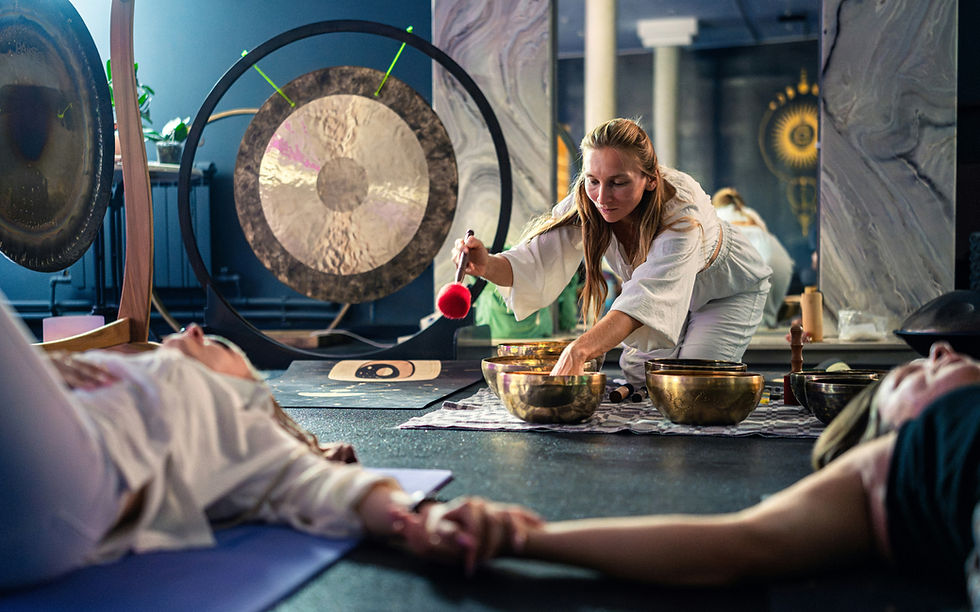
A sound bath is often designed as a guided meditative experience using vibration, resonance, rhythm and silence. Depending on the facilitator, this may involve instruments such as:
Singing bowls (Tibetan or crystal)
Gongs
Chimes and bells
Percussion instruments like rainsticks or ocean drums
Melodic instruments such as handpans, flutes or stringed instruments
Voice, including toning, humming or chanting
The intention is not simply to “hear pleasant sounds.” Rather, sound can help guide attention away from mental chatter and into a more receptive, inward state.
For many people, that makes sound baths an easier entry point into meditation compared with sitting silently and trying to still the mind alone.
The Wellbeing Return on Investment

When people ask whether something is worth the money, they usually want to know the return.
With sound baths, the return is often measured in how you feel afterward. Research into meditation-based practices suggests meaningful benefits for stress and wellbeing.
A large review published by the U.S. National Institutes of Health found mindfulness meditation programs showed moderate evidence of reducing anxiety, depression and psychological stress. Source: https://pmc.ncbi.nlm.nih.gov/articles/PMC4142584/
A clinical study published in JAMA Internal Medicine found mindfulness meditation improved sleep quality and reduced fatigue in older adults with sleep disturbances.Source: https://jamanetwork.com/journals/jamainternalmedicine/fullarticle/2110998
That does not mean a sound bath is a magic fix.
But it does suggest that guided meditative practices can support:
Nervous system regulation
Mental recovery
Emotional decompression
Better sleep and clarity
Sometimes people ask whether meditation can feel more restorative than sleep.
The common phrase that “20 minutes of meditation equals 4 hours of sleep” is not scientifically established in that exact form. However, meditation has been shown to activate the body’s parasympathetic nervous system—the part associated with rest, repair and recovery.
That helps explain why some people leave a sound bath feeling unexpectedly refreshed.
Not All Sound Baths Are Equal

This is one of the biggest reasons why one person may think a sound bath is absolutely worth it and another may not.
Just like yoga classes differ depending on the teacher, setting and style, sound baths vary enormously.
1. The Location and Environment
The space matters more than many people realise.
A session held in a simple scout hall can still be beautiful. But a carefully curated environment with soft lighting, comfortable spacing, and an intentional atmosphere can feel very different.
Some sessions may be indoors, some outdoors, and others may even be offered in immersive settings such as hammocks or floats.
The environment can shape how quickly you settle and how deeply you relax.
2. Comfort and Props
Comfort directly affects your ability to drop in.
Some facilitators provide:
Mats
Blankets
Bolsters or cushions
Eye pillows or eye masks
Hammocks
Others may ask you to bring your own.
This may seem minor, but if you are uncomfortable physically, it is often harder to relax mentally.
3. Duration of the Session
Sound baths vary in length.
30 minutes may offer a short reset
60 minutes is common
75 to 90 minutes may allow deeper immersion and gentler integration
Longer does not always mean better, but duration can affect the depth of the experience.
4. The Facilitator’s Experience and Training
This field is not highly regulated.
That means people offering sound baths can have very different backgrounds.
Some questions worth considering:
Have they had meditation training?
Do they understand how to guide relaxation safely?
Have they spent time developing their own personal practice?
A facilitator who understands meditation, presence and pacing often creates a very different experience from someone who is simply playing instruments.
Instrument Quality Matters—But So Does Playing Ability

The quality of instruments certainly matters.
Like musical instruments, sound bath tools vary widely in tone, resonance and craftsmanship.
But high-quality instruments alone do not automatically create a high-quality experience.
Think of it this way:
Two musicians can have the same instrument and play the same song, yet the experience can feel completely different.
The same applies in a sound bath.
The facilitator is not just producing sound—they are creating a soundscape.
That includes:
Timing
Pacing
Layering of sounds
Use of silence
Sensitivity to the energy in the room
A skilled facilitator knows when to build intensity, when to soften, and how to create space between sounds.
That is often what transforms a sound bath from simply “listening to nice sounds” into something that feels immersive, grounding and deeply restorative.
Finding a Style That Resonates With You

Every facilitator has their own style.
Some sessions may feel:
Deeply calming and spacious
Emotionally evocative
More energising
More structured or guided
More intuitive and flowing
Just as two yoga teachers can teach the same class differently, two sound bath facilitators using similar instruments can create completely different experiences.
This means that finding a facilitator whose style resonates with you can be one of the biggest factors in whether a sound bath feels worth it.
Sometimes this takes a little trial and error.
You may find it helpful to:
Read reviews from previous participants
Ask friends for recommendations
Try a few different facilitators before deciding what suits you best
What feels powerful for one person may not feel as impactful for another.
And that is normal.
The Experience Is Personal

Another important part of value is understanding that every sound bath can feel different—even with the same teacher.
Why?
Because your internal state changes. What is going on in your life at the time matters.
You may arrive feeling:
Mentally busy
Emotionally heavy
Physically tired
Calm and open
That affects the experience.
Some sessions may feel deeply relaxing.
Some may feel emotional.
Some may feel subtle.
That does not necessarily mean one session was better than another. It often means you met the experience from a different place.
Meditation is personal.
The same session can land differently depending on where you are in your own journey.
Travel Time and Practical Value

Value is not only about what happens in the room.
It is also worth asking:
How far do you need to travel?
Is it easy to get there?
Does the timing fit into your life?
A cheaper session that takes a long commute may feel less worthwhile than a slightly higher-priced one nearby.
Convenience can affect the overall value more than many people realise.
Testimonials and Real Experiences
\

People often describe sound baths in very personal ways.
Common reflections include:
“I slept better that night.”
“I didn’t realise how much tension I was holding until afterward.”
“I felt lighter, clearer and calmer.”
Some people notice the effects during the session. Others feel the benefits unfold over the following day.
That lingering sense of calm is often part of what people value most.
Is One Session Enough?
For some people, one session can be enough to feel a shift.
That shift may be:
Physical relaxation
Emotional release
Mental clarity
Simply a feeling of pause and spaciousness
Unlike the gym, where results often require repeated effort, a single sound bath can sometimes begin the process immediately.
That said, regular sessions may help deepen the benefits.
Try It First
If you are curious but not ready to book yet:
Free Guided Meditation
Enter your details to access a free meditation.
A short guided meditation can be a wonderful way to experience the calming effect of being gently guided inward.
Join Us In Person in Sydney
If you are in Sydney and would like to experience this in person:
Monthly Mindful Movement and Sound Bath Meditation
This gentle monthly session includes:
Mindful movement incorporating by Tai Chi
Guided meditation
Immersive sound bath relaxation

✨ Visit our website for the current timetable or contact us at info@theresaperrywellbeing.com for private, community or work classes.
Final THOUGHTS

Final Thoughts: Are Sound Baths Worth the Money?
For many people, yes.
But the value depends on more than just price.
It depends on:
The environment
The facilitator’s experience
The quality and use of instruments
The style of the session
How it resonates with you personally
Not all sound baths are equal.
And just because one session did not fully connect with you does not mean another will not.
Sometimes the most worthwhile part of a sound bath is not what happens during the hour itself.
It is what happens afterward.
A quieter mind. A softer body. A deeper breath. A little more space to meet life from a calmer place.
And for many people, that can be well worth the investment.
Other related articles


Comments