
Mental Benefits of Tai Chi: Stress, Focus, and Emotional Calm


Tai Chi is often described as “meditation in motion” — a gentle, flowing movement practice that blends posture, breathing, and focused attention. For many people who find still-sitting meditation difficult, Tai Chi provides a welcoming, embodied alternative: rather than forcing the mind to be still while the body remains immobile, Tai Chi invites attention to arise naturally through movement. The result is a practice that calms the nervous system, sharpens focus, and creates an emotional steadiness that people notice both during and after class.
Tai Chi offers a complete approach to wellbeing — blending movement, mindfulness, and energy flow. If you’d like a broader look at how it benefits both body and mind, explore our in-depth guide: The Complete Benefits of Tai Chi for Body and Mind
Want to experience the calming effects of Tai Chi for yourself?
Fill in your details below to receive a free Tai Chi video designed to bring more balance and vitality into your day.

📍 Sydney readers: Join me live at my next Mindful Movement & Sound Bath Meditation for an immersive experience — find out more here.

OVERVIEW

How Tai Chi calms stress and anxiety

Tai Chi engages the body in slow, deliberate sequences that coordinate breath, balance, and intention. That combination appears to down-regulate the stress response. Clinical studies and systematic reviews report reductions in self-reported anxiety and stress after regular Tai Chi practice, with benefits shown across ages and settings. Movement, rhythmic breathing and the mindful attention required by the forms appear to reduce worry and physiological arousal — the same mechanisms that make other mind-body practices effective for anxiety. ScienceDirect+1
Physiologically, Tai Chi may influence the hypothalamic-pituitary-adrenal (HPA) axis and autonomic balance. Some research finds lower markers of stress (for example, reductions in cortisol or improved heart-rate variability) among regular practitioners, suggesting the practice helps shift the body out of chronic fight-or-flight patterns toward greater parasympathetic (rest-and-digest) activity. While individual study results vary, the pattern across trials supports meaningful stress relief for many people who practice consistently. SCIRP+1
The way we move affects how we feel — correct posture, smooth transitions, and steady breathing not only calm the mind but also strengthen the body. Learn more in Physical Benefits of tai Chi: Balance, Flexibility and Strength
Focus, attention, and cognitive benefits

Tai Chi is not only calming — it’s cognitively engaging. Performing forms requires attention to shifting weight, maintaining alignment, sequencing movements, and synchronising breath. Those repeated, low-pressure demands train sustained attention and working memory in a way that’s often more accessible than seated concentration exercises.
Randomised trials in older adults and clinical groups have shown improvements in attention, executive function, and overall cognitive performance following Tai Chi programs. These benefits are thought to come from an interaction of physical activity (which supports neuroplasticity), the attentional demands of the forms, and the calming, stress-reducing effects that help the brain operate more efficiently. For populations at risk of cognitive decline, Tai Chi has emerged as a promising, low-risk intervention to help preserve or boost cognitive function. JAMA Network+1
Why movement creates mindfulness or emotional calm

Traditional seated mindfulness asks you to place attention on sensations, thoughts or the breath while holding still. Tai Chi achieves the same present-moment anchoring but via movement: attention naturally rests on immediate sensations (weight bearing, foot contact, breath flow), on the requirement to coordinate the next step in the form, and on subtle postural adjustments. This embodied focus reduces rumination (repeated worrying thoughts) because the practice continually redirects awareness to sensory input and intentional action.
Looking for a simple way to relax your mind and restore focus?
Just fill in your details and access your free Tai Chi video — a gentle introduction to mindful movement and energy flow.
✨ Experience mindful movement and deep relaxation in Sydney.
📍Reserve your spot below
Empirical studies measuring “mindfulness” as a trait or state have reported increases after short Tai Chi interventions, especially when the practice explicitly highlights interoception (awareness of internal bodily sensations) and mindful intention. So Tai Chi can cultivate the same qualities of presence and non-reactivity that formal mindfulness training promotes — often more easily for people who struggle with sitting still. SpringerLink+1
The “moving energy” explanation — practical and poetic creating emotional calm
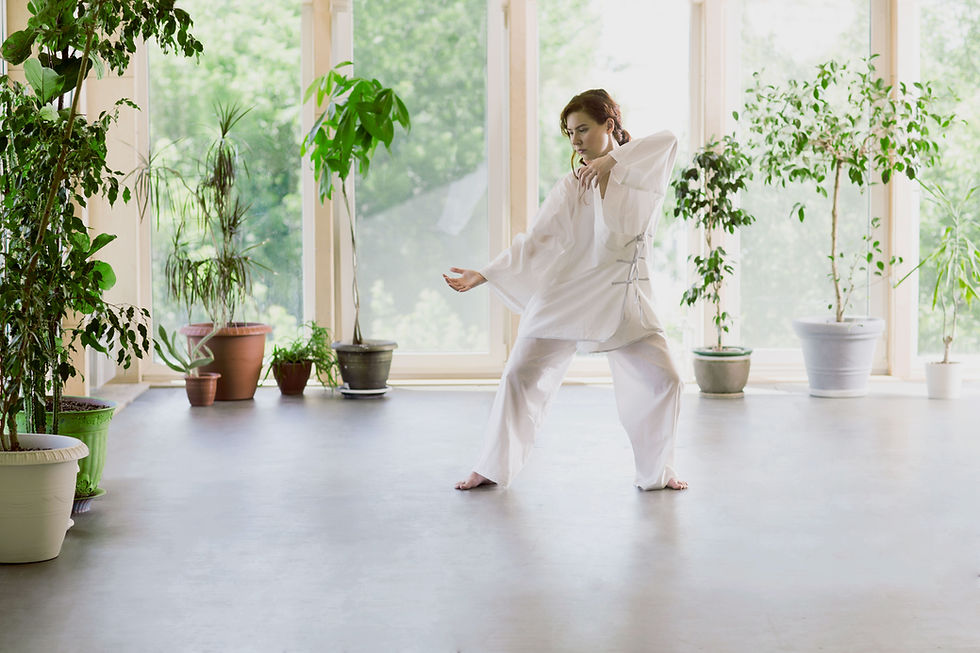
Many Tai Chi teachers use the language of “moving energy” to describe what happens when we practice — and that language captures important experiential truths. Tightness, held breath, and static posture create friction in the body-mind system; gentle, continuous movement encourages circulation, deeper breathing, and the release of held tension. Whether you interpret that release as “energy flowing” or as improved muscular, fascial and nervous system dynamics, the practical outcome is the same: increased ease, reduced physical tension, and a calmer mental state.
Because Tai Chi integrates breath, alignment and attention, it creates many points of contact for the nervous system to self-regulate. That’s why students commonly report feeling lighter, clearer and more emotionally balanced after a session.
What the science suggests about practice frequency and expectations
Research tends to show bigger effects with consistent practice — for example, programs delivered 2–3 times per week for several weeks or months. Even short, regular classes (30–60 minutes) produce measurable gains in mood, sleep quality and attention. That said, benefits can be felt immediately by many people after a single session (a calmer mind, steadier breathing, less muscular tension), and these acute effects accumulate with continued practice. ScienceDirect+1
Simple ways to practice Tai Chi mindfully (for beginners)
Focus on breath and weight shifts: Notice how your inhale and exhale link with stepping or shifting weight. Let breath be a gentle metronome.
Attend to posture: Lengthen the spine, soften the knees, relax the shoulders. Small postural adjustments make big differences in how the body feels.
Move slowly and with intention: Slow movement gives attention time to settle and senses time to register.
Use form as an anchor: If the mind wanders, return to the next movement or the feeling in your feet.
Finish with stillness: Spend a few minutes standing or seated, noticing how your breath and mind have changed.
Who benefits most?
Tai Chi is accessible across the lifespan and fitness levels. It’s especially attractive for people who: prefer movement to stillness, find seated meditation challenging, are managing anxiety or chronic stress, want a low-impact exercise that also trains attention, or are seeking gentle practices to support ageing and cognitive health. Because it’s low-impact and adaptable, Tai Chi is safe for most people — but anyone with specific medical concerns should check with a healthcare provider before starting a new exercise program.
🌱 You’ve read about the benefits — now feel them. Click below to fill in details and get your free Tai Chi video to start your own practice.
🎵 Ready for the next step? Join me in person for my Mindful Movement & Sound Bath Meditation in Sydney — reserve your place now.
Takeaway
Tai Chi offers a practical path to calm: by combining posture, breath, and sustained attention in movement, it calms the nervous system, sharpens focus, and creates emotional steadiness. Scientific studies and reviews support its benefits for anxiety reduction, improved attention and cognition, and enhanced mindfulness — making Tai Chi a powerful option for people who prefer to practice meditation through motion rather than stillness. If you’ve struggled to sit quietly or want a gentle, embodied way to reduce stress and increase presence, Tai Chi is worth a try.
Tai Chi nurtures balance inside and out. To explore how it enhances both your body and mind, visit The Complete Benefits of Tai Chi for Body and Mind.
Or, if you’re curious about how Tai Chi builds strength, balance, and flexibility, check out Physical Benefits of Tai Chi: Balance, Flexibility, and Strength.


Comments